Saharan bee
- Scientific name
- Apis mellifera sahariensis
- Regions
- Southern Tunisia (Oases of Tozeur, Nefta, Kebili, Gabès)
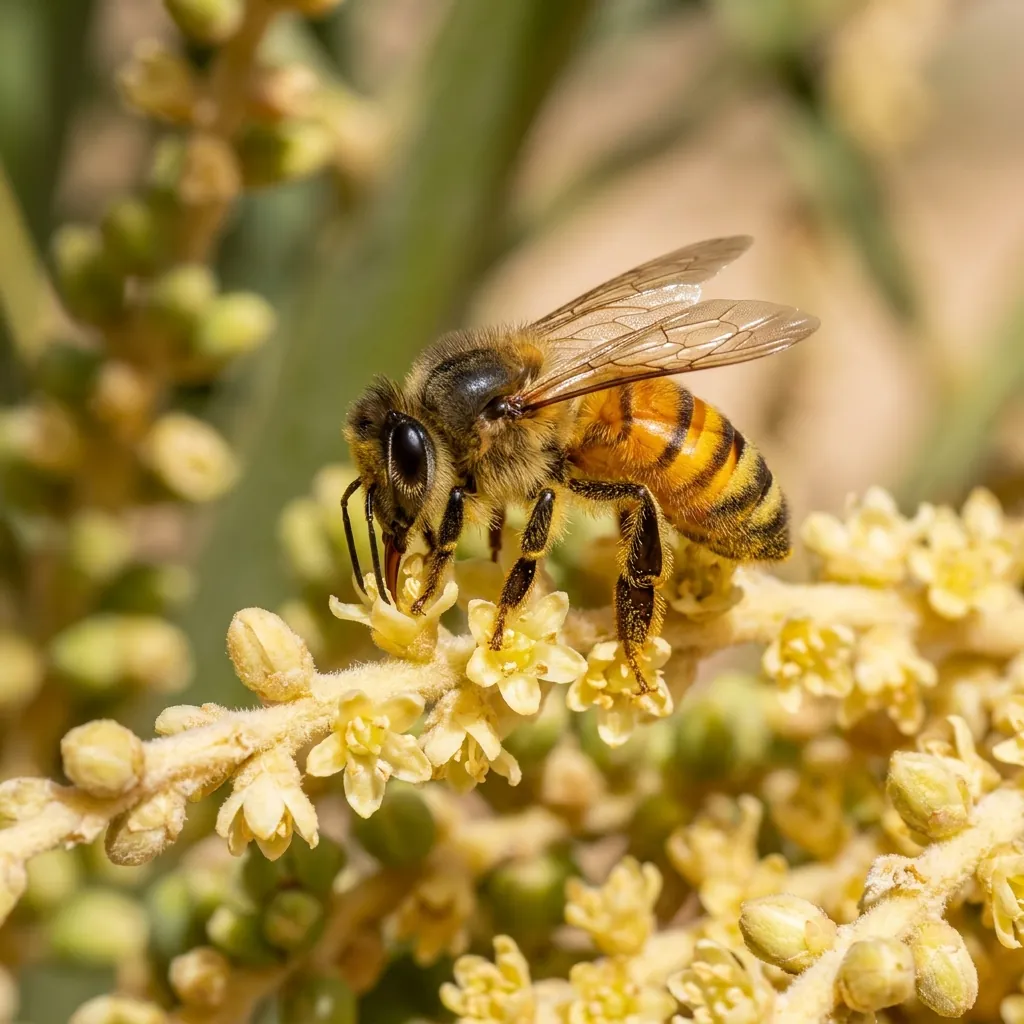
Domestic bee (social)
Indigenous and threatened (very localized)
Saharan / Hot arid
Spring (flowering of oasis fruit trees and date palms) and autumn. Reduced activity during the hottest summer months (except early morning) and in winter.
Rare / Critically endangered in Tunisia due to hybridization with the Tellian bee introduced by transhumant beekeepers.
Size
11 - 13 mm (slightly smaller and thinner than intermissa)
Color
Very distinctive bright orange-yellow abdomen on the first 2 or 3 segments, legs and thorax covered with light hair.
Particularities
Long tongue (about 6.5 mm) allowing it to forage on deeper corollas.
Aggressiveness
Very low. Extremely gentle bee, easy to handle without smoke or heavy protection.
Swarming
Low to moderate. Regulates its population well according to the volume of its hive.
Propolis use
Low.
Robbing
Low.
Perfect adaptation to desert conditions. Capable of flying at temperatures above 45°C. Tolerates water scarcity by recovering moisture from oases. Capable of traveling very long distances to find resources.
Highly sought after for its gentleness and tolerance to extreme heat. However, its preservation in Tunisia requires isolated mating stations in the desert to avoid hybridization with the black Tellian bee. Excellent for oasis beekeeping (date palm honey, alfalfa, henna).
Essential pollinator of underlying oasis crops and pre-desert wild flora.
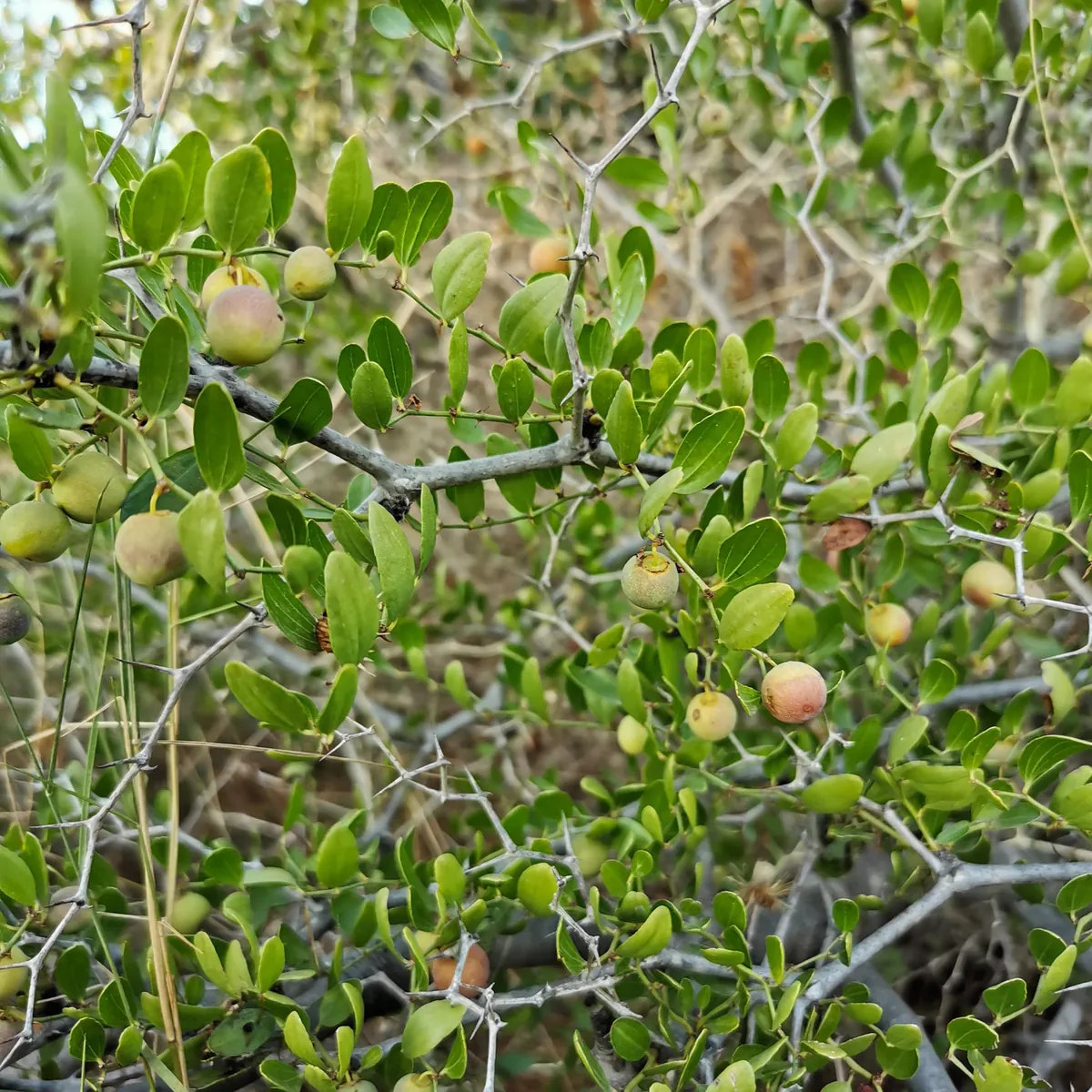
Wild Jujube Tree
Ziziphus lotus
- Sidi Bouzid
- Gafsa
- Tataouine
- Médenine
- Kairouan
- Gabès
- Jujube Honey
Thorny wild shrub typical of the arid and semi-arid climates of central and southern Tunisia.
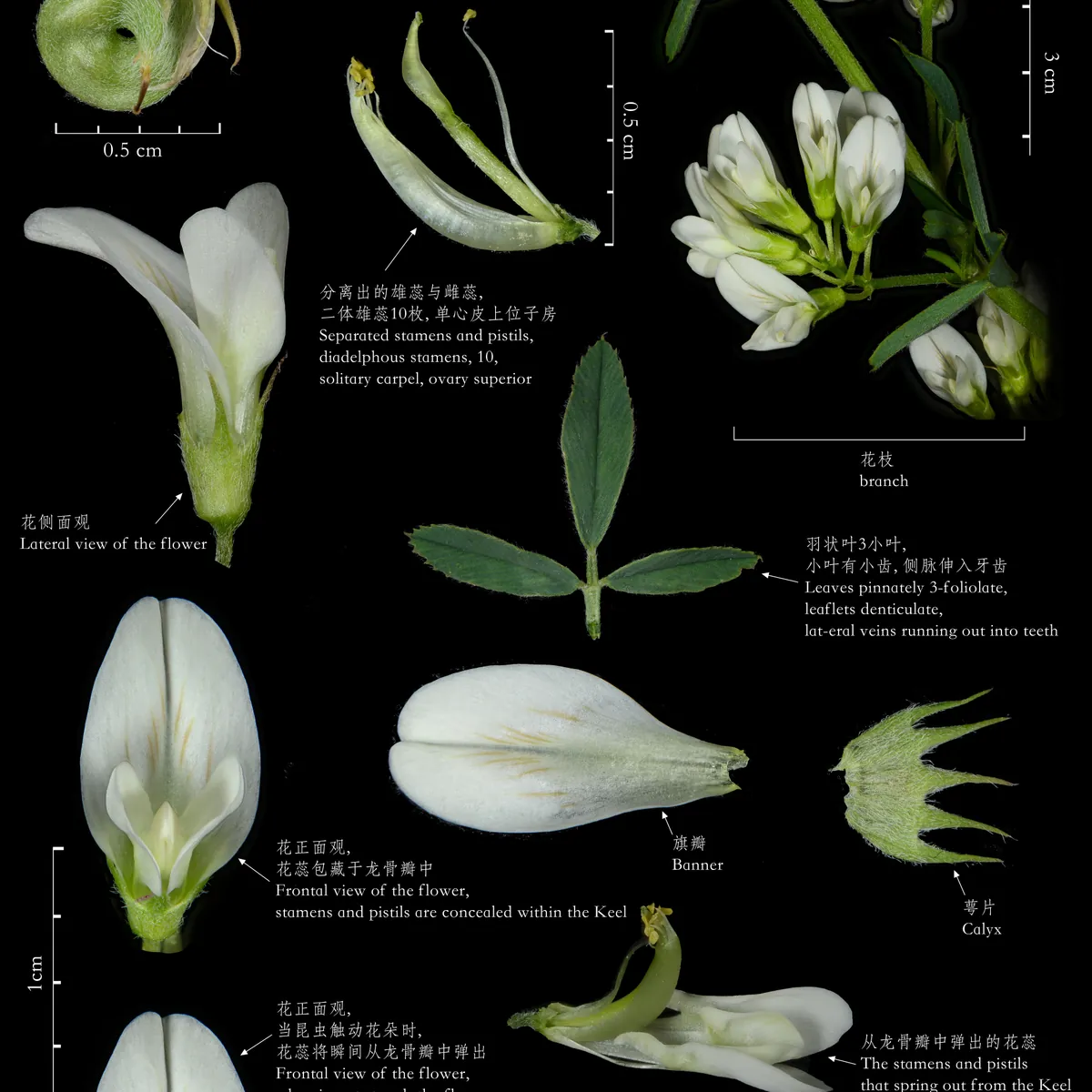
Cultivated Alfalfa
Medicago sativa
- Béja
- Jendouba
- Kairouan
- Sidi Bouzid (oasis and irrigated areas)
- Alfalfa Honey
Cultivated for livestock in irrigated areas, its purple flowering is very attractive to bees.
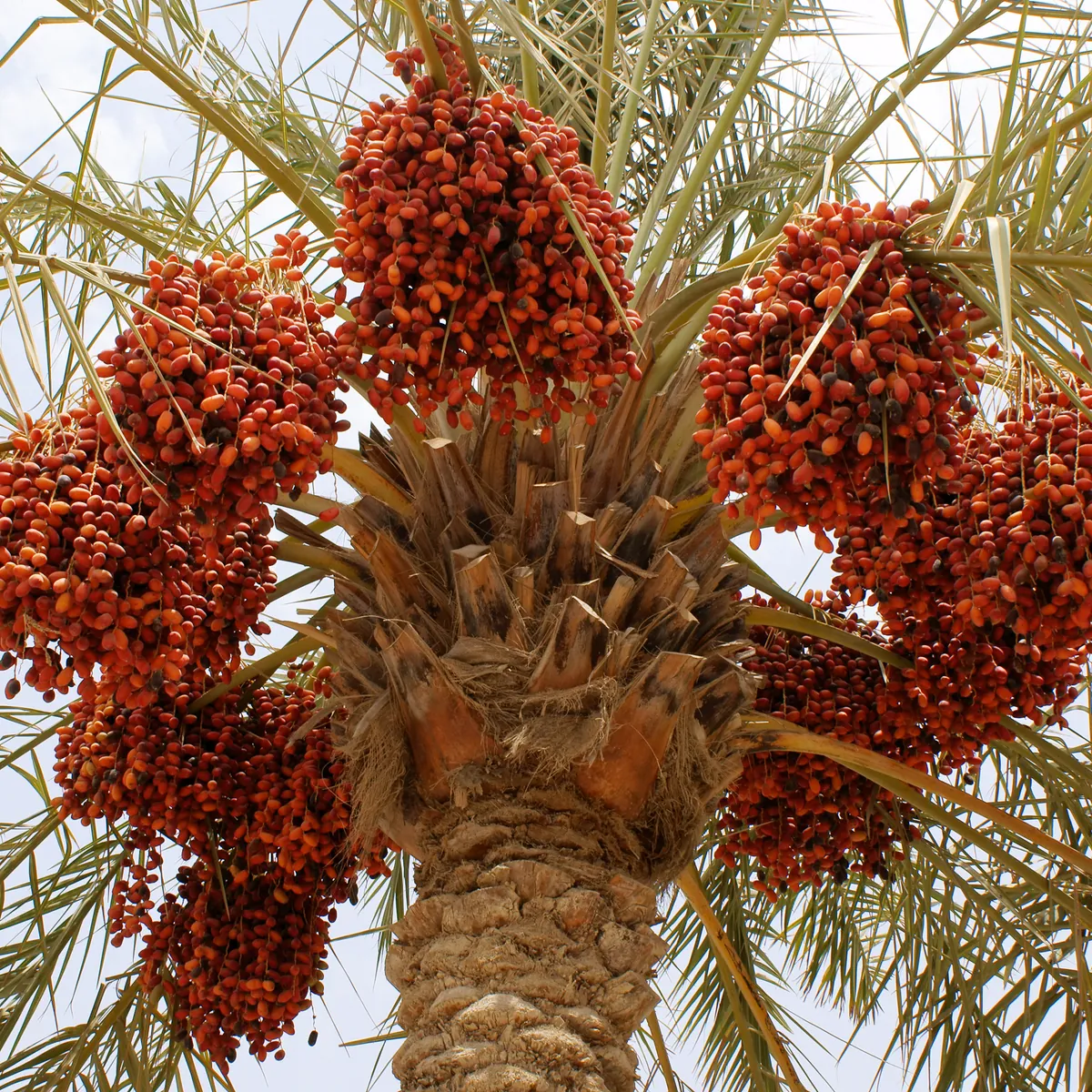
Date palm
Phoenix dactylifera
- Oasis of Tozeur
- Kebili
- Gabès
- Gafsa
Cultivated in the oases of southern Tunisia, it offers essential flowering in areas with limited alternative flora.
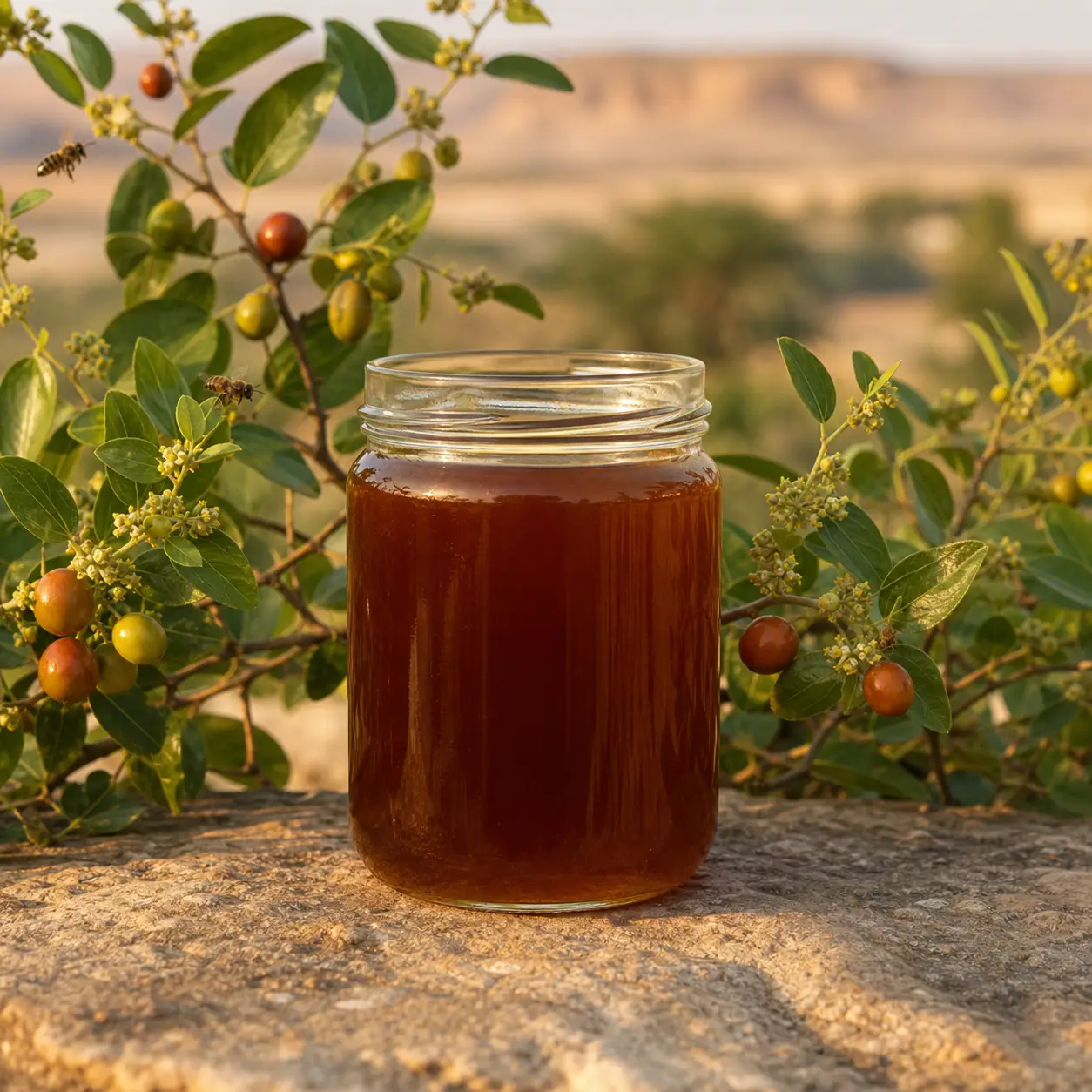
Jujube Honey
Ziziphus lotus
- Gafsa
- Sidi Bouzid
- Tataouine
- Médenine
Tunisian 'Sidr' is an exceptional and highly sought-after honey, derived from the wild vegetation of arid areas.