Lasioglossum malachurum
- Scientific name
- Lasioglossum malachurum
- Regions
- Found throughout the territory, particularly in trampled clay or sandy soils
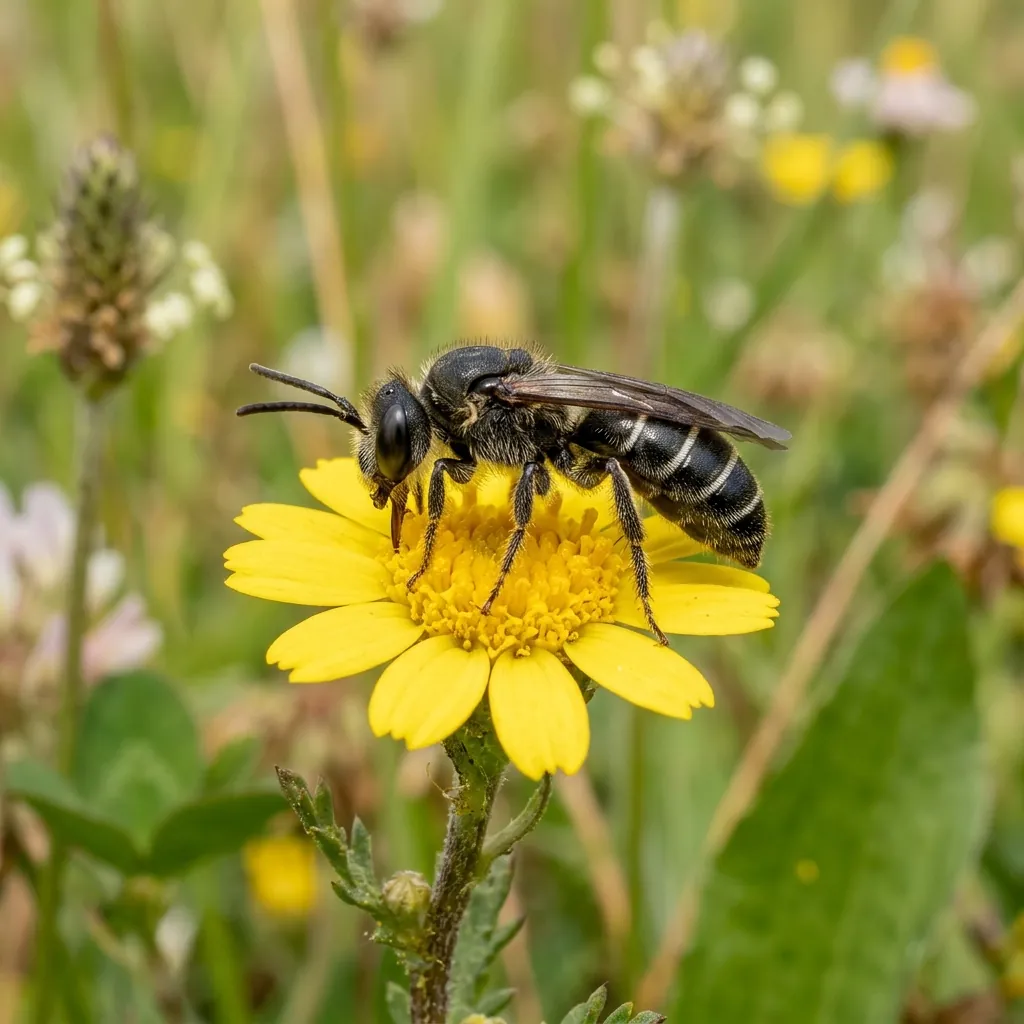
Wild bee (semi-social)
Indigenous and wild
Mediterranean to semi-arid
From spring to autumn (March to October).
Very common (among the most abundant wild bees in Tunisia).
Size
6 - 8 mm (very small)
Color
Black body with slight metallic brown reflections, with narrow bands of whitish hairs at the base of the abdominal segments.
Particularities
Females have a distinctive groove at the tip of the abdomen.
Aggressiveness
None. Too small to pierce human skin with its stinger.
Swarming
Not applicable (founding queens create small underground nests where they raise a first generation of workers).
Propolis Use
None (digs vertical nests directly into compact soil).
Robbing
Not applicable.
Excellent adaptation to dry and compacted soils (paths, clearings, vineyards, orchards).
Does not produce harvestable honey. However, its strong presence guarantees the pollination of orchard ground cover and small wild flowers. Avoiding excessive plowing on paths helps its conservation.
Visits a very large number of plants (generalist), playing a key role in maintaining low-growing wild flora (Brassicaceae, Asteraceae).
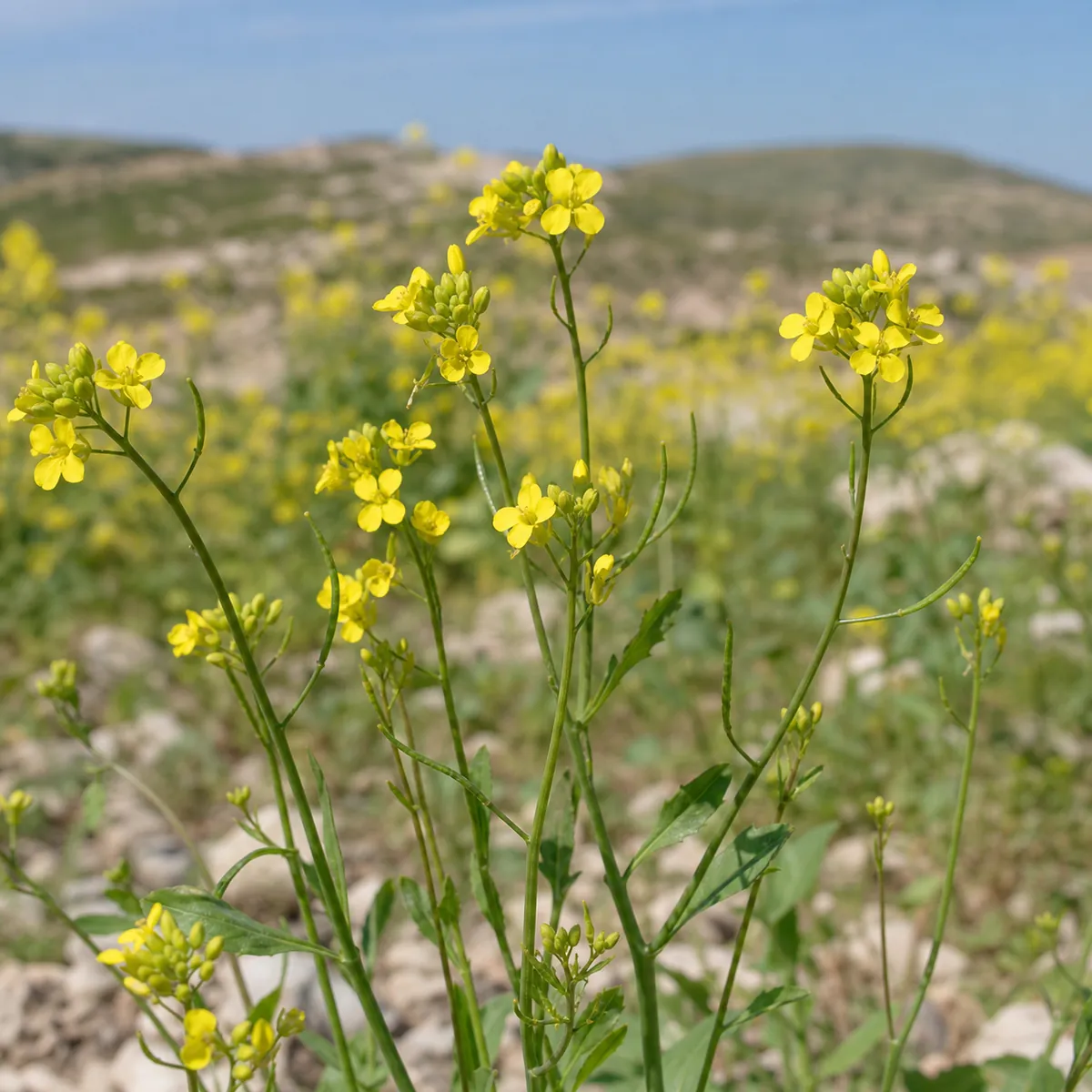
Wild Mustards and Brassicaceae
Brassicaceae spp.
- Tunisia
Functional group used when pollen identification or observation does not allow for species determination. Brassica and Sinapis types are documented in Tunisian apicultural pollen.
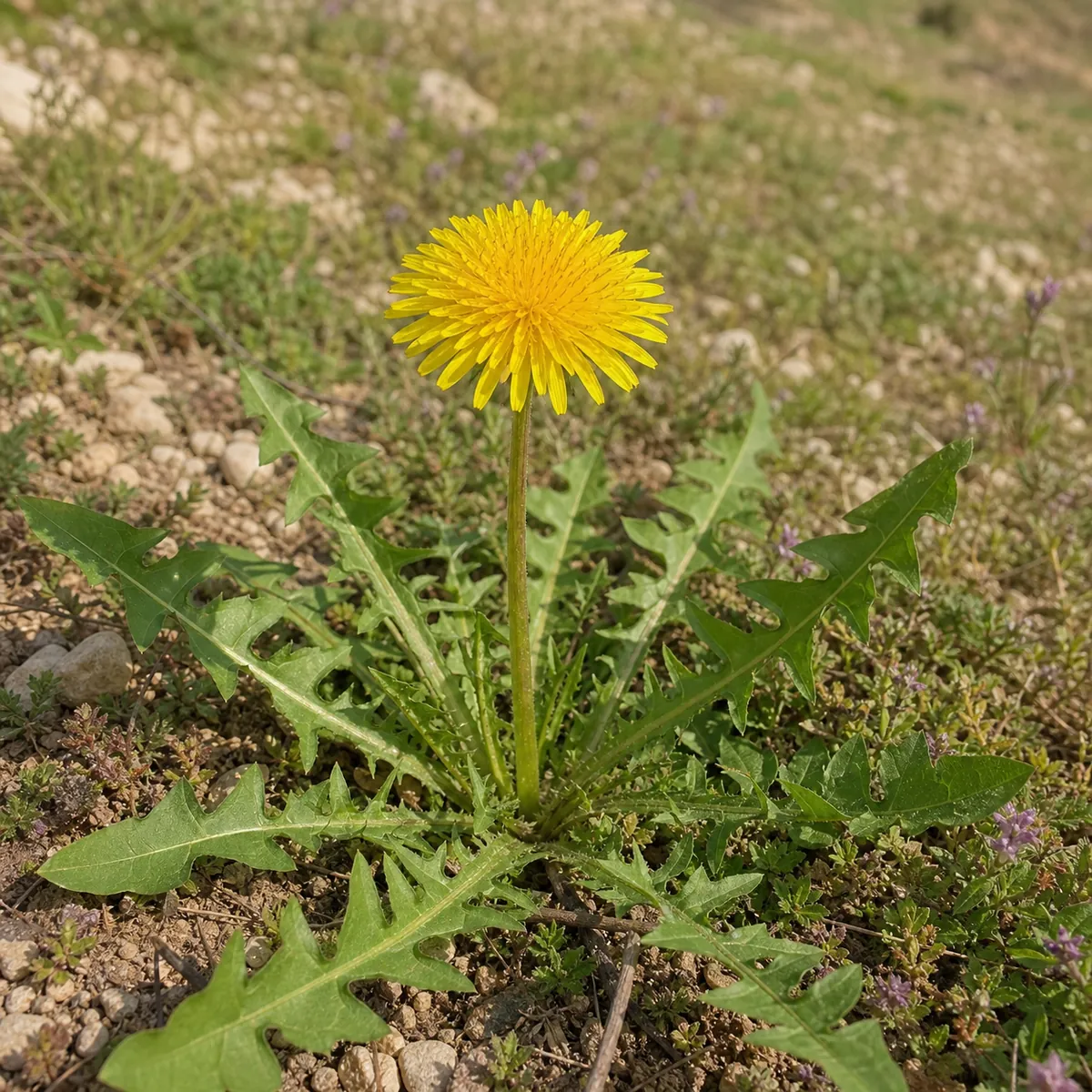
Common Dandelion
Taraxacum officinale
- Tunisia (fresh sites, meadows and disturbed areas)
Reference taxon for the Taraxacum pollen type, frequently observed in the multifloral apiary pollens studied in Tunisia.