Maghrebian three-horned mason bee
- Scientific name
- Osmia tricornis
- Regions
- North and Center (agricultural zones, fruit-growing plains of the governorates of Zaghouan, Nabeul, Béja)
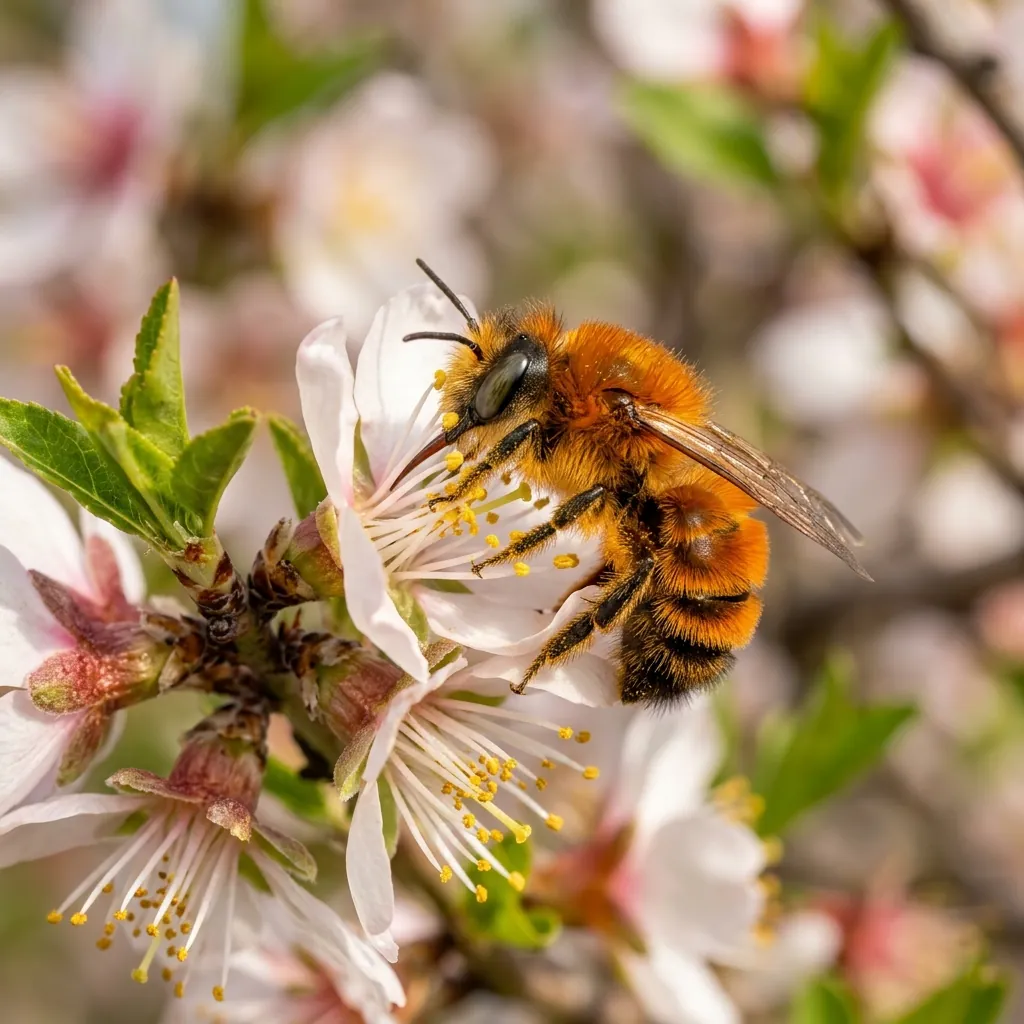
Wild bee (solitary)
Native and wild
Mediterranean
Early spring (February to May). Very early.
Common.
Size
10 - 12 mm
Color
Very dense reddish-brown to rust-red hair covering the entire body, rounded abdomen.
Particularities
The female has two small horns on her face (clypeus) and a third smaller one, used to pack mud in the nest.
Aggressiveness
Completely harmless. Never stings unless pressed against the skin.
Swarming
Not applicable.
Use of propolis
None (uses wet mud to partition its nesting tunnels).
Robbing
Not applicable.
Active even in cloudy and cool weather (from 10-12°C), giving it an advantage over the honey bee in early spring.
Suitable cavity nest boxes can support mason bees near orchards. Available data confirm Osmia tricornis in Mediterranean almond landscapes, but pollination performance needs local evaluation.
Spring mason bee associated with Mediterranean orchard landscapes and the season's first floral resources.
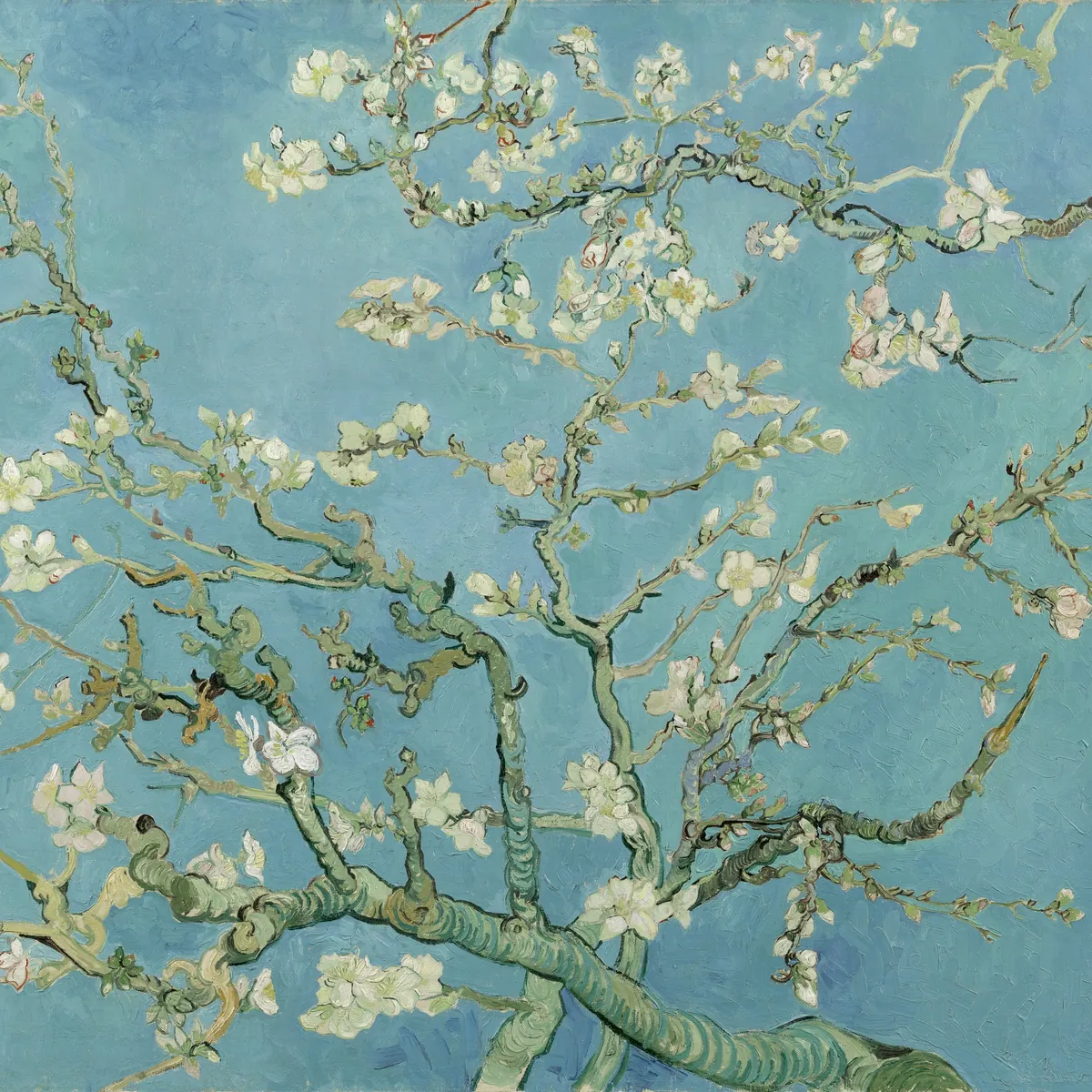
Almond Tree
Prunus dulcis / Prunus amygdalus
- Sfax
- Sidi Bouzid
- Kairouan
- North of Tunisia
- Cap Bon
First major bloom of the year, crucial for stimulating spring brood development.