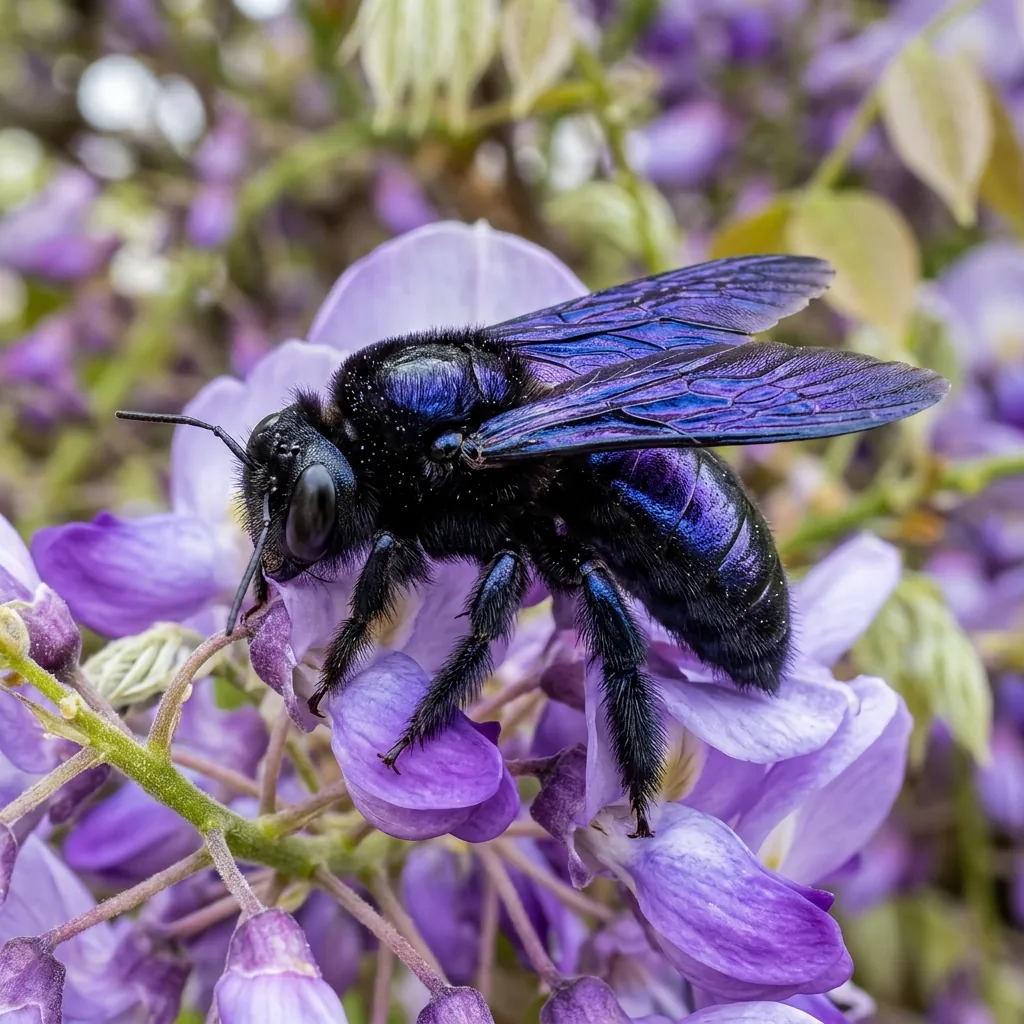
Violet Carpenter Bee
- Scientific name
- Xylocopa violacea
- Regions
- All of Tunisia (wooded areas, orchards, gardens, urban parks)
Wild bee (solitary)
Indigenous and wild
Mediterranean to semi-arid
From spring to autumn (March to October). Hibernates as an adult in cavities.
Very common.
Size
20 - 28 mm (one of the largest bees in Tunisia)
Color
Entirely shiny black body with magnificent metallic blue-violet reflections on the wings and body.
Particularities
Massive body, very powerful mandibles adapted for boring dead wood.
Aggressiveness
None. Males sometimes defend a territory by flying in an intimidating manner but do not have a stinger. Females have a stinger but are extremely peaceful.
Swarming
Not applicable.
Propolis Use
None.
Robbing
Not applicable.
High thermal adaptability. Easily accommodates human presence and finds refuge in rafters, vine stakes, or dead trees.
No direct interest in production beekeeping. However, its presence is an excellent indicator of the ecological health of the environment. Beekeepers should preserve it by leaving dead wood or bored logs near apiaries.
Key pollinator for large flowers such as Fabaceae (wisteria, broom, beans) and some Lamiaceae, which it is one of the few to be able to open.
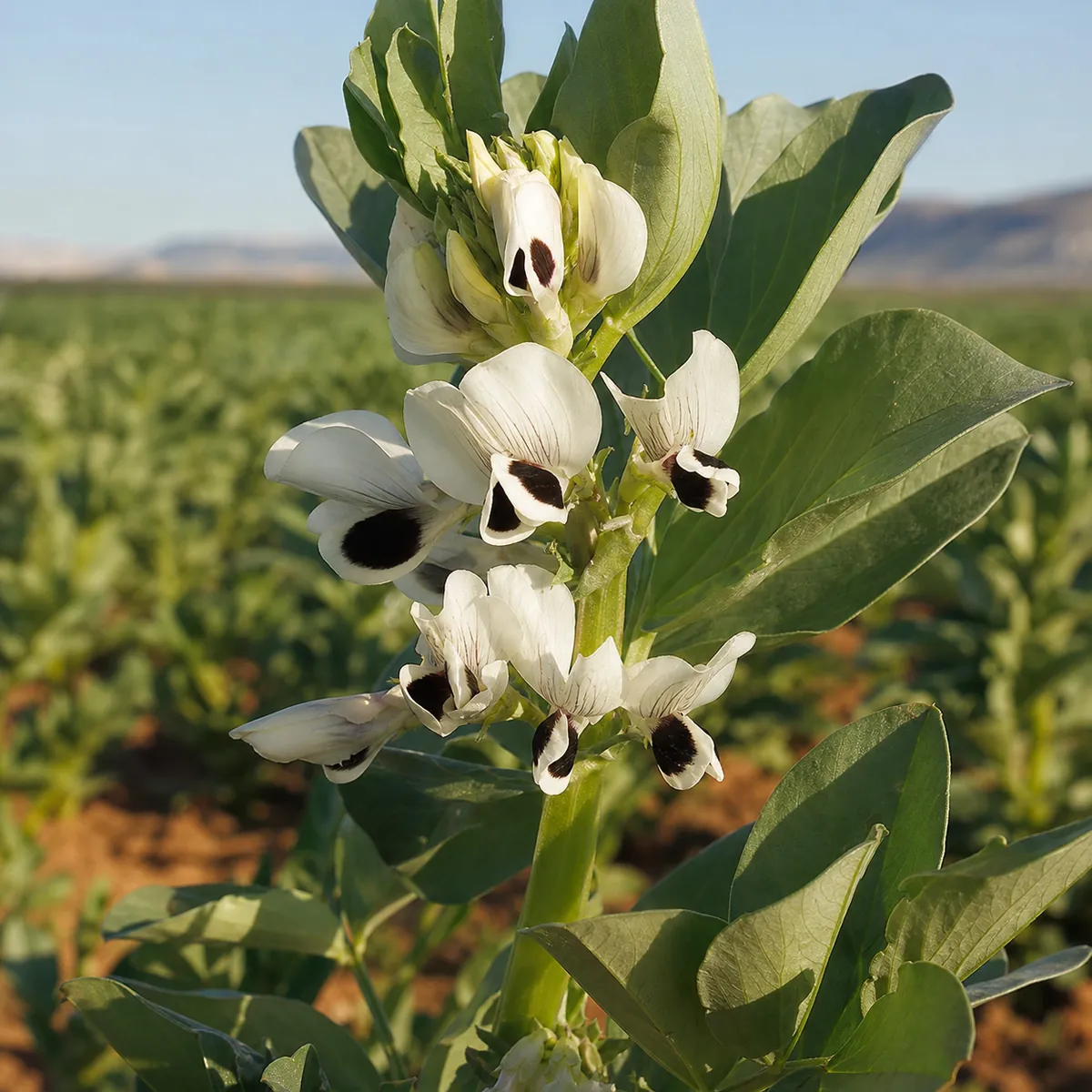
Broad bean
Vicia faba
- Agricultural zones and oases of Tunisia
Legume cultivated in Tunisian agricultural and oasis systems, visited by several wild and domestic bees.
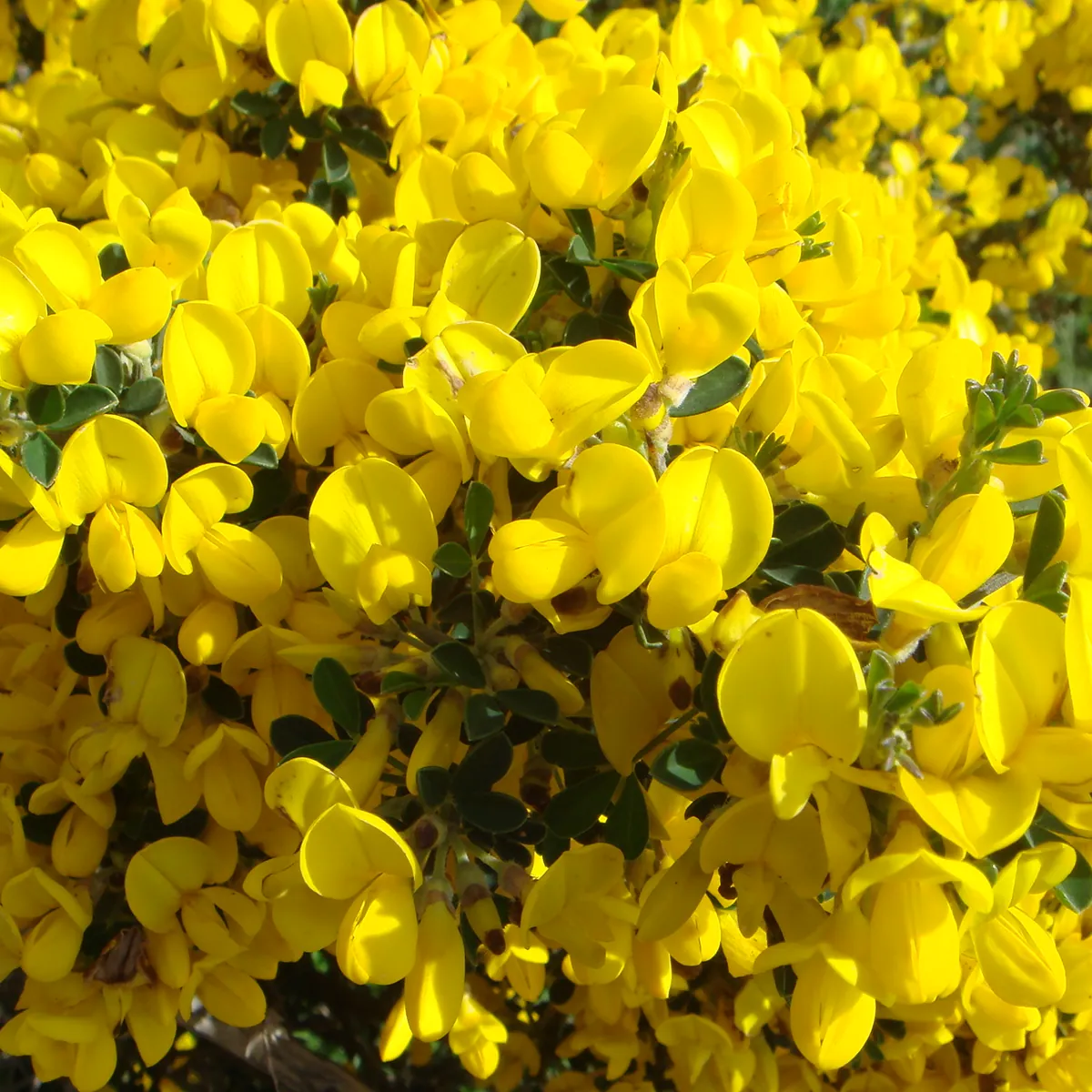
Spiny Broom
Calicotome villosa / Calicotome spinosa
- North of Tunisia
- Collines du Sahel
- Cap Bon
- Kef
- Siliana
- Mountain Honey / Wildflower
Thorny wild shrub covering the Mediterranean hills, with bright yellow flowers.