Caraway honey
- Scientific name
- Carum carvi
- Regions
- Kef
- Siliana
- Kasserine
- Zaghouan
- Jendouba
- Cap Bon (Nabeul, Menzel Bouzelfa, Soliman, Beni Khalled)
- Harvest month
- Mai
- June
- July
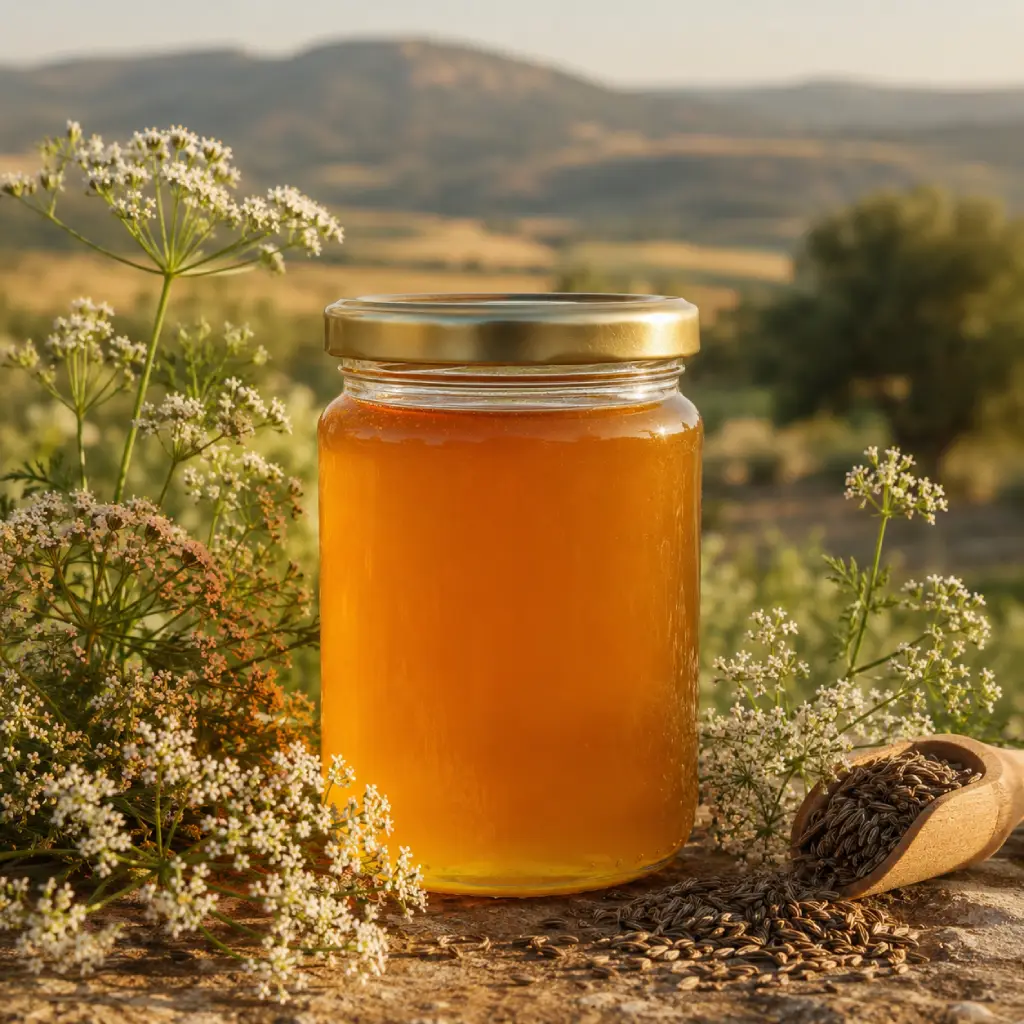
Caraway honey is a rare floral honey, produced by bees from the nectar of caraway flowers (Carum carvi), an aromatic plant belonging to the Apiaceae family. Known in Tunisia as « كروية », this plant develops small white flowers grouped in umbels that attract bees during their blooming period.
This honey is generally distinguished by its aromatic and vegetal character. Its flavor may feature warm, slightly spicy, and herbal notes, subtly reminiscent of the scent of caraway seeds. Its intensity, color, and texture vary depending on the production region, climatic conditions, the harvest period, and other honey-producing species present nearby.
عسل الكروية
It may also be referred to in Arabic by the expression « عسل أزهار الكروية », which literally means « honey from caraway flowers ».
- Floral origin: nectar of caraway flowers (Carum carvi).
- Color: generally golden yellow to amber, with variations depending on the geographical origin and the floral composition of the harvest.
- Aroma: vegetal, aromatic, and slightly spicy.
- Flavor: mild, with herbal notes and a slight warm or spicy sensation at the end of the palate.
- Texture: liquid after harvest, then more creamy once it starts to crystallize.
- Crystallization: natural and variable, influenced by storage temperature and the honey's sugar composition.
- Intensity: generally medium, with a more noticeable aromatic persistence than that of very mild floral honeys.
Caraway honey is harvested in areas where the plant grows or is cultivated in sufficient quantity to constitute an important resource for bees. The flowering forms many small umbels accessible to pollinating insects and can provide nectar as well as pollen to the colonies.
To obtain honey with a caraway-dominant profile, the hives must be placed near plots or stands that are abundant during the flowering period. The harvest should then be carried out before another significant bloom strongly alters the honey's botanical origin.
Availability of this honey remains limited, as it depends on plant density, the length of the flowering period, rainfall, temperatures, and the activity of the colonies. A pollen analysis can be used to confirm the dominant or significant presence of caraway pollen in a harvest.
Like other natural honeys, caraway honey primarily provides energy as a food made up of natural sugars. It also contains, in varying amounts, enzymes, organic acids, and antioxidant compounds originating from the nectar and the bees' activity.
In traditional uses, caraway is particularly associated with digestive comfort. Its seeds are used as an aromatic and carminative plant, especially to accompany difficult digestions and sensations of bloating. Caraway honey is therefore sometimes consumed after meals or added to a warm infusion for its aromatic taste and soothing effect.
- It may help temporarily soothe the throat thanks to the honey's naturally gentle texture.
- It provides a readily available source of energy.
- Its phenolic compounds may contribute to the honey's overall antioxidant activity.
- Its traditional pairing with caraway makes it a honey appreciated for supporting digestive comfort.
These uses do not mean that the honey has the same concentrations or the same effects as caraway seeds, extracts, or essential oil. The specific properties of caraway honey are still not well documented scientifically, and it should not be presented as a medical treatment.
Honey should not be given to children under 12 months. People with diabetes or those following a specific diet should take into account its high natural sugar content.
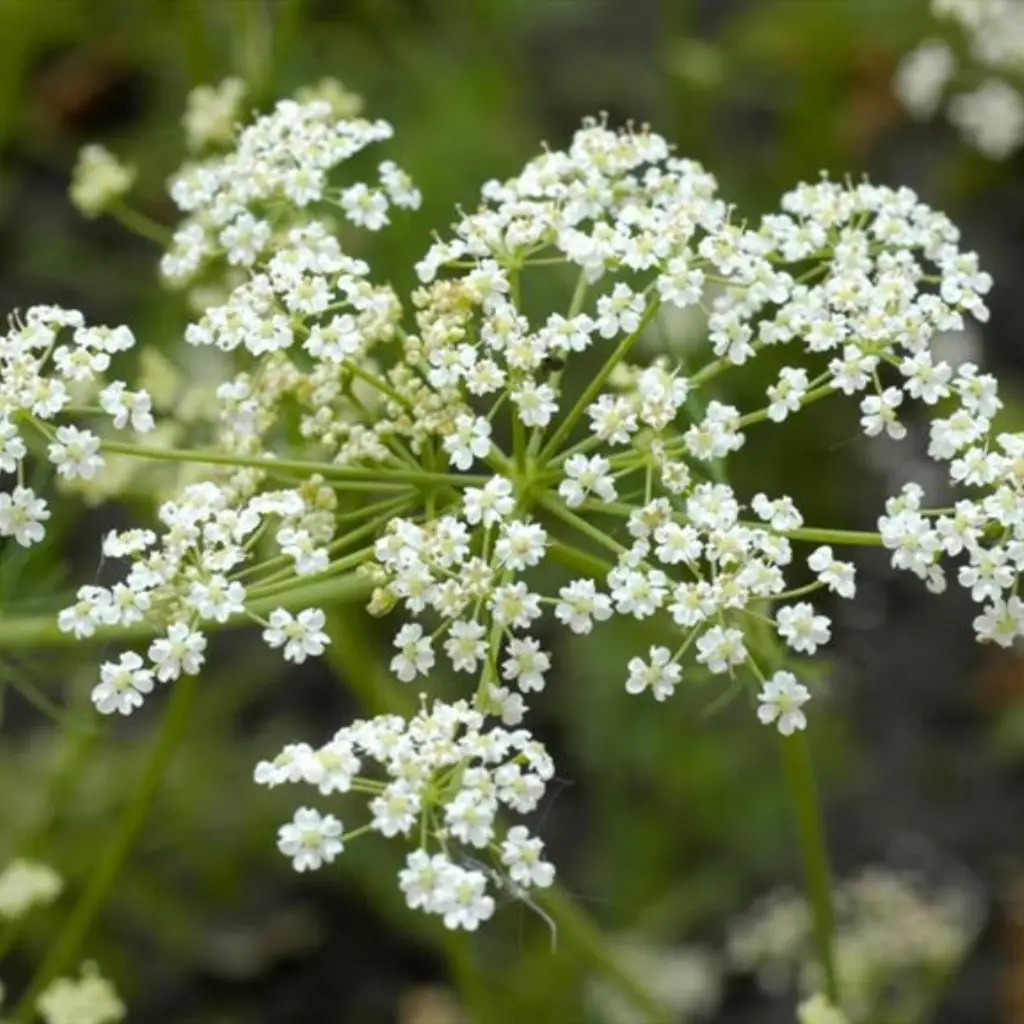
Carvi
Carum carvi
- North and Center (agricultural zones, fruit-growing plains of the governorates of Zaghouan, Nabeul, Béja)
- North and Central Tunisia (Cap Bon, Tunisian Dorsale, olive groves and wastelands)
- Caraway honey
Carvi (Carum carvi) is an aromatic plant from the Apiaceae family. It produces small white flowers, sometimes slightly pink, grouped in umbels. This open floral structure allows bees and many other pollinating insects to easily access nectar and pollen.