Carvi
- Scientific name
- Carum carvi
- Regions
- North and Center (agricultural zones, fruit-growing plains of the governorates of Zaghouan, Nabeul, Béja)
- North and Central Tunisia (Cap Bon, Tunisian Dorsale, olive groves and wastelands)
- Flowering month
- April
- Mai
- June
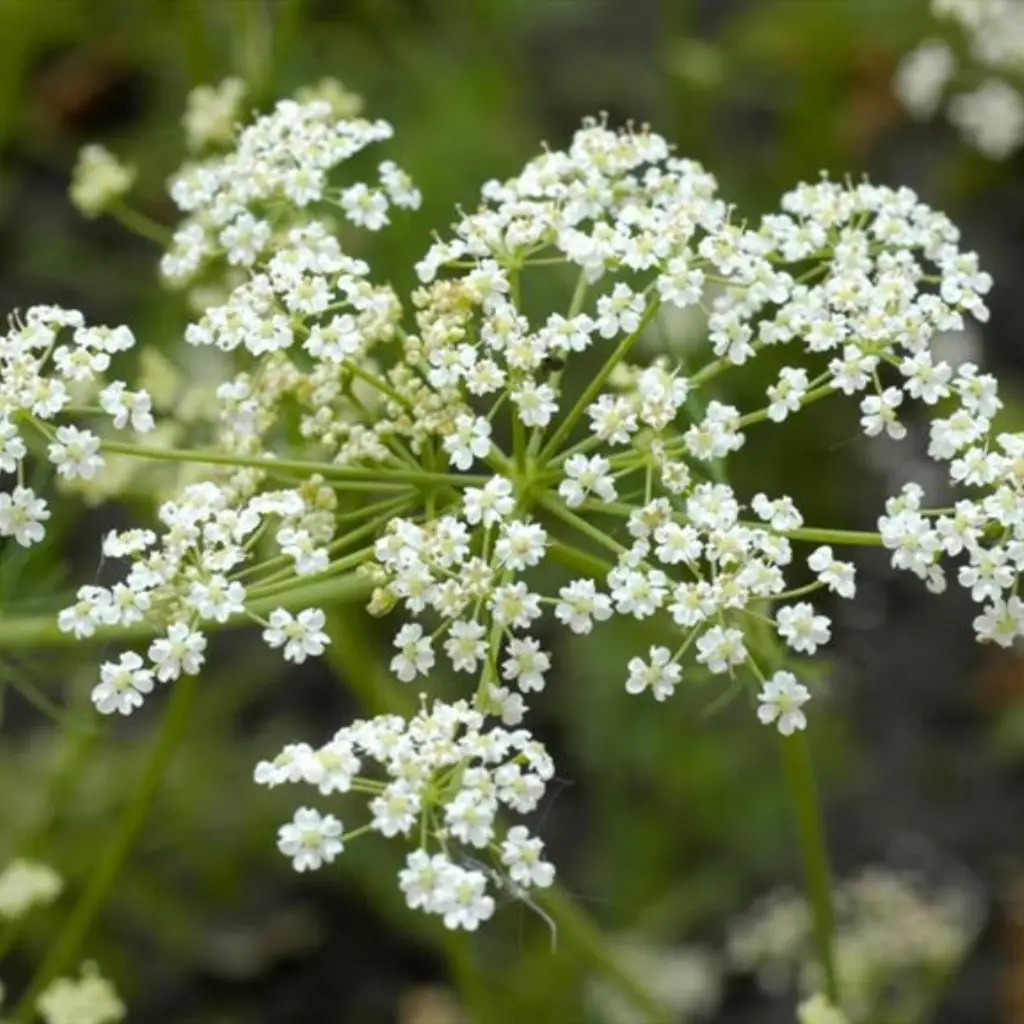
Carvi (Carum carvi) is an aromatic plant from the Apiaceae family. It produces small white flowers, sometimes slightly pink, grouped in umbels. This open floral structure allows bees and many other pollinating insects to easily access nectar and pollen.
The plant is especially known for its aromatic fruits, commonly called "caraway seeds," used as a spice and in various traditional preparations. Its flowering can also be an interesting source for beekeeping when the plant is present in sufficiently abundant stands.
الكروية
Karwiya, karouia or krouia.
In Tunisia, pronunciation and transcription into Latin characters may vary depending on the regions and uses.
Apiaceae — Apiacées.
This botanical family includes many aromatic and honey-producing plants, such as fennel, coriander, anise, cumin, and wild carrot.
Carvi is an aromatic herbaceous plant. Cultivated forms are generally biennial, although there are also annual varieties. The plant first produces a rosette of finely divided leaves, then develops flowering stems bearing umbels during its reproductive cycle.
Carvi typically flowers in spring and in the early part of summer, most often between April and June. This period may be earlier or later depending on the climate, altitude, sowing date, rainfall, and the cultivated variety.
In warm regions, flowering can begin as early as the beginning of spring. In cooler areas or at higher altitudes, it may continue until the beginning of summer.
Carvi is associated with caraway honey, called in Arabic "عسل الكروية" or "عسل أزهار الكروية".
This name may be used by a beekeeper when the hives are placed near a plentiful carvi bloom and when this plant is considered the main source of foraged material during the harvest period.
However, the presence of a dominant bloom or the label on a jar is not enough to scientifically confirm a monofloral honey. A melissopalynological analysis, possibly complemented by physico-chemical and sensory analyses, is necessary to determine its botanical origin with greater certainty.
The honey presented as carvi honey is generally golden yellow to amber in color. Its aroma can be vegetal, warm, and slightly spicy, with notes that recall the plant's aromatic character.
- Color : golden to amber, with variations depending on the harvest.
- Texture : liquid after extraction, then likely to become more creamy.
- Aroma : vegetal, herbaceous, and slightly spicy.
- Flavor : mild, aromatic, and sometimes lingering on the palate.
- Crystallization : natural and variable depending on the sugar composition and storage conditions.
These characteristics are only indicative. They can vary depending on the terroir, the climate, other honey-producing plants present around the apiary, and the actual proportion of carvi nectar in the harvest.
Carvi can provide nectar and pollen to bees. Its many small flowers grouped in umbels are easily accessible and can attract a significant diversity of pollinating insects.
Its beekeeping value depends mainly on the flowering area, the density of the plants, the length of the flowering period, and weather conditions. An isolated plot or a low presence of carvi generally does not allow producing a substantial amount of honey specifically associated with it.
When flowering is abundant, carvi can be an interesting seasonal resource to support colony activity and diversify their food intake.
Bees visit carvi flowers to collect nectar, used in honey production, as well as pollen, which is essential for feeding larvae and young bees.
By carrying pollen from one flower to another, bees also contribute to the pollination of carvi and promote the formation of its fruits. The presence of hives near crops can thus help improve flower fertilization and the consistency of production.
For colonies, carvi mainly acts as a supplementary or temporarily dominant resource. Its real importance should be assessed based on the overall floral environment of the apiary and the other species that bloom at the same time.
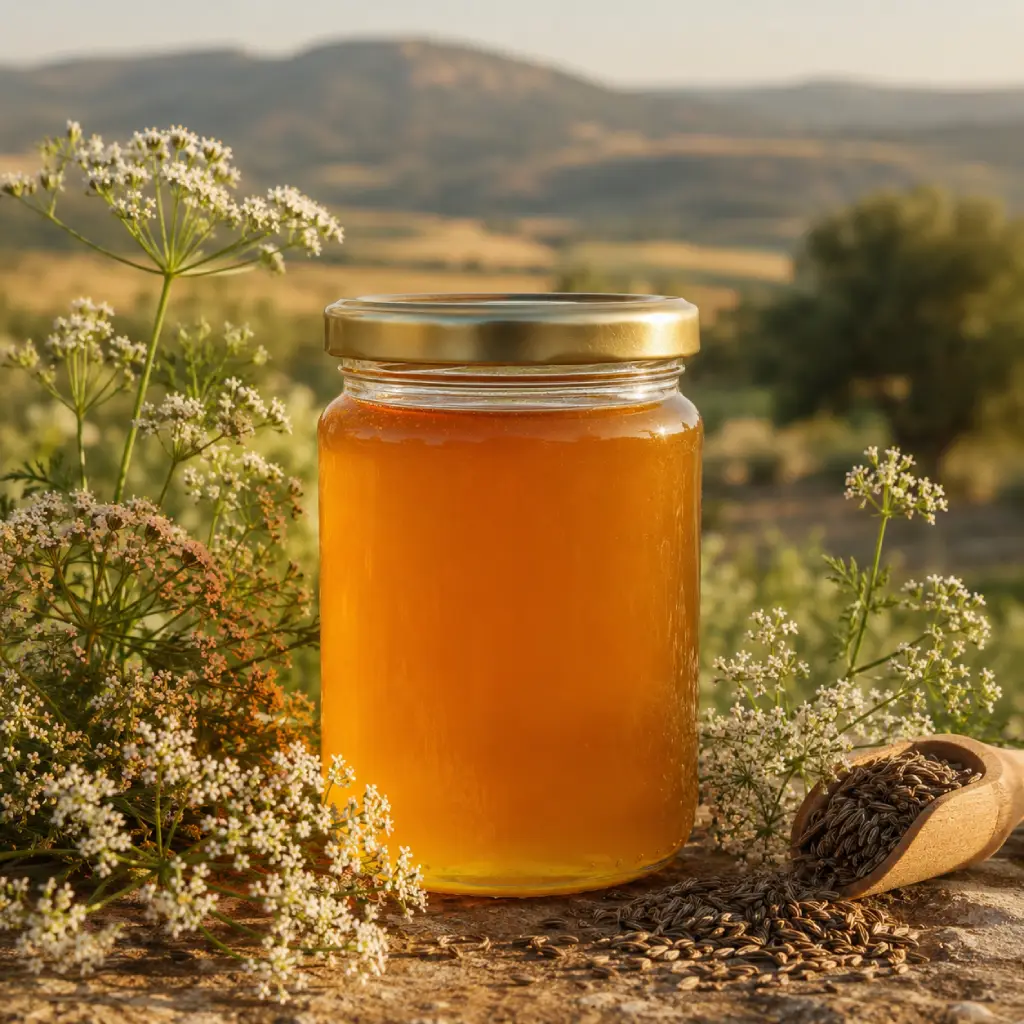
Caraway honey
Carum carvi
- Kef
- Siliana
- Kasserine
- Zaghouan
- Jendouba
- Cap Bon (Nabeul, Menzel Bouzelfa, Soliman, Beni Khalled)
Caraway honey is a rare floral honey, produced by bees from the nectar of caraway flowers (Carum carvi), an aromatic plant belonging to the Apiaceae family. Known in Tunisia as « كروية », this plant develops small white flowers grouped in umbels that attract bees during their blooming period.